


Some of the strongest student projects begin with a hobby that refuses to stay a hobby.
For Saksham Kumar, that was aviation.
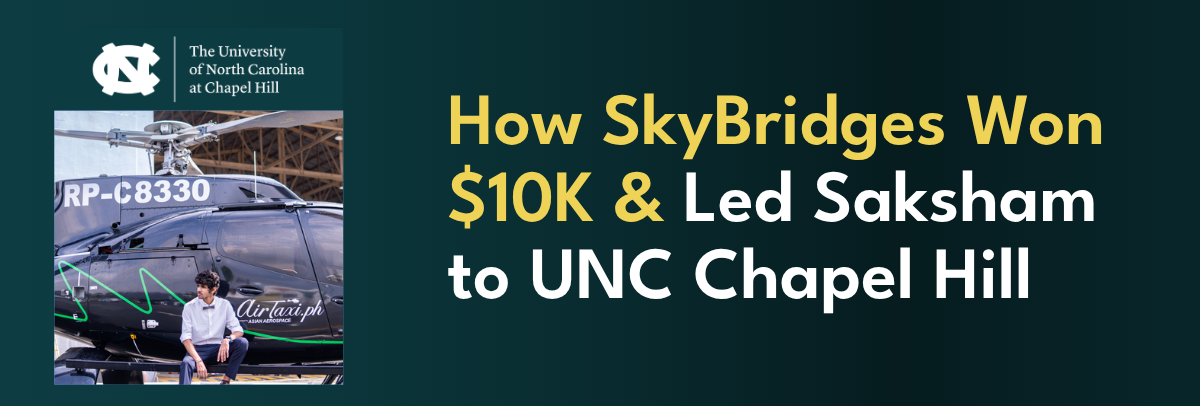
His interest eventually became SkyBridges, an aerial-tourism project that connects flying with disaster relief in the Philippines. The project later secured a $10K grant and became one of the initiatives featured in Athena Education’s Class of 2026 Annual Results Report.
What makes SkyBridges interesting is not simply the grant. It is how Saksham took something he already loved and found a way to make it useful.
How SkyBridges Turned Aviation Into Impact
SkyBridges was built around aerial tourism, but its purpose went beyond sightseeing.
Saksham is a pilot in training who created the project after developing a fascination with seeing the Philippines from the air. The platform offers aerial tours over destinations including Manila and Taal Volcano.
There is also a social-impact layer.
SkyBridges says 100% of its profits support typhoon-relief efforts, including airdrops of essential supplies and airlifts during flooding.
That is what gave the project a clear identity.
It was not simply “I like aviation.”
It became: How can I use aviation to create an experience while also supporting communities affected by disasters?
That shift from interest to action is what makes a passion project worth paying attention to.
Athena’s guide on turning a hobby into a college admissions asset explores the same idea: the strongest projects usually grow from something the student already cares about.
How SkyBridges Won a $10K Grant
Eventually, SkyBridges earned something most high-school projects never reach: outside funding.
Athena’s Annual Report records a $10K grant for the initiative and highlights its focus on funding disaster relief through aerial tourism.
That matters because funding is a form of external validation.
Anyone can create a project title or launch a website. Convincing someone else that your idea deserves funding is harder.
For students, the useful takeaway is simple:
- Start with a genuine interest.
- Connect it to a real problem.
- Build something tangible.
- Test whether people actually care.
- Seek funding, partnerships or recognition once the project has substance.
The grant should be the result of the work, not the reason you started it.
If you are sitting on an idea but do not know how to turn it into a meaningful project, book a free consultation to explore directions based on your actual interests.
Why SkyBridges Strengthened Saksham’s Profile
A $10K grant alone does not create a strong college application.
What matters is what the project reveals about the student.
With SkyBridges, Saksham could show a clear connection between aviation, tourism, environmental awareness and disaster relief.
That creates coherence.
Instead of another generic “Founder” title, there is a story behind the project: why it started, what it does and whom it is designed to help.
That distinction matters more than ever.
Athena’s 2026 Annual Report notes that selective universities are increasingly looking for authenticity, ownership and evidence that students genuinely drove the work they present in their applications.
SkyBridges fits that idea well. Saksham’s own site identifies him as the founder, describes him guiding flights and explains how his interest in aviation shaped the project.
This is also why understanding what admissions officers actually read first can be useful. A memorable project works best when it strengthens the wider story of the application.
What Students Can Learn From SkyBridges
The point is not that every student now needs to build an aviation company.
The better question is: what do you already care enough about to keep working on?
Maybe you love drones and could explore environmental mapping. Maybe you are obsessed with finance and could build something for local businesses. Maybe sport is your thing, and you notice an accessibility problem nobody around you is solving.
Strong student projects often sit at the intersection of interest, problem and action.
SkyBridges eventually secured a $10K grant and became part of Saksham’s broader college profile. But the more useful lesson is what came first: curiosity, ownership and the willingness to turn an interest into something real.
You can explore SkyBridges alongside other student projects in Athena’s Class of 2026 Annual Results Report.
And if you are still trying to find the project idea that genuinely feels like yours, join the Discord community to swap ideas, discover opportunities and see what other students are building.